
Please enjoy the following segments from,
Confronting Silence: The Multicultural Music Group’s 25-26 Season Part One

For thirty years, the Multicultural Music Group has practiced a form of listening that resists erasure. Our work has never been limited to presenting music as simply an aesthetic object. Instead, it has positioned music as historical testimony, ethical witness, and cultural memory. To confront silence is to insist that histories relegated to the margins, through violence, colonialism, racism, or neglect, be made audible and witnessed again.

Center for Arts Education Research at Teachers College • Columbia University
We believe that music, when curated with intention, becomes a counter-archive: a way of preserving memory when official histories fail. Over three decades, that is what we have done by commissioning, contextualizing, and performing works that illuminate what official global histories often refuse to name aloud.

Borders Series on the Multicultural Music Group, Inc. Youtube Channel
The opening arc of this 30th-anniversary season exemplifies that mission. Each small presentation, which will lead into our 30-year Anniversary Multicultural Music Encounter in May 2026, engages multiple historical ruptures which are explored below: urban poverty in Brazil, artistic rebellion under authoritarianism in Argentina, political assassination and mass violence in Colombia, and racial terror in the United States. Together, they form a transnational meditation on how sound confronts silence across borders and generations.
We proudly celebrate our commitment to presenting history through music for the advancement of social-emotional learning and multicultural understanding during this year’s Black History Month.
FY 2025 - 2026 mid-year programmatic analysis

Hispañola Jam Recap: Celebrating Culture, Connection, and Live Music at Tío Pepe
“Favela”: Bossa Nova and the Silences of Brazilian Modernity
Performed by Jim Ferraioulo and Hispañola Jam
Music by Antônio Carlos Jobim
Tio Pepe Restaurant, November 11
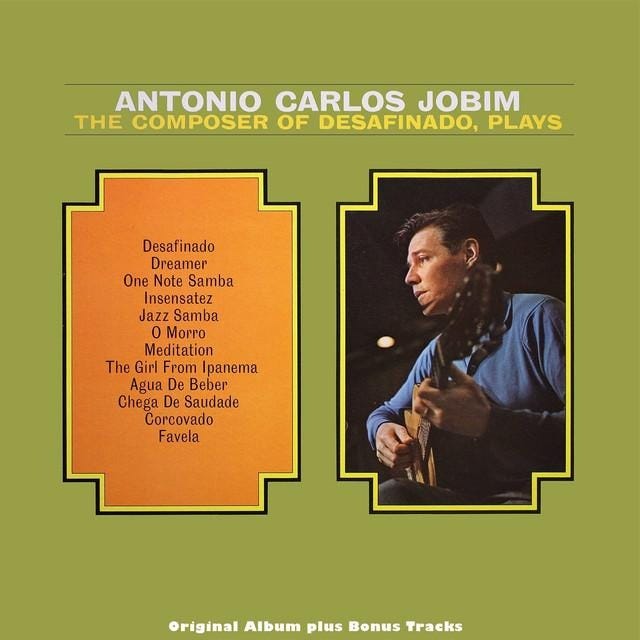
The first piece of our season, “Favela,” composed by Antônio Carlos Jobim, occupies a deeply complex and often under-examined place within Brazil’s cultural history. Jobim is internationally revered as one of the principal architects of bossa nova, a musical movement that emerged in late-1950s Rio de Janeiro and quickly became synonymous with refinement, intimacy, and cosmopolitan modernity. With its understated vocals, sophisticated harmonies, and jazz-inflected rhythms, bossa nova projected an image of Brazil that aligned seamlessly with mid-century ideals of progress, leisure, and global belonging (Castro 2000).
Yet this polished sonic identity masked profound social contradictions. Bossa nova was born in affluent, predominantly white neighborhoods such as Ipanema and Copacabana, spaces insulated from the realities of poverty, racial inequality, and urban precarity that defined much of the city (McCann 2004). As the genre gained international acclaim, it became a cultural export that suggested national harmony at precisely the moment Brazil was grappling with deep structural inequities.
It is within this context that “Favela” becomes especially significant. The title alone signals a rupture in bossa nova’s aesthetic narrative. Rather than invoking beaches, romance, or bourgeois intimacy, Jobim directs attention toward the informal settlements that climbed Rio de Janeiro’s hillside communities born of rapid urbanization, rural displacement, and the incomplete abolition of slavery in 1888, which freed millions without land, compensation, or access to social infrastructure (Perlman 2010; Skidmore 1999).
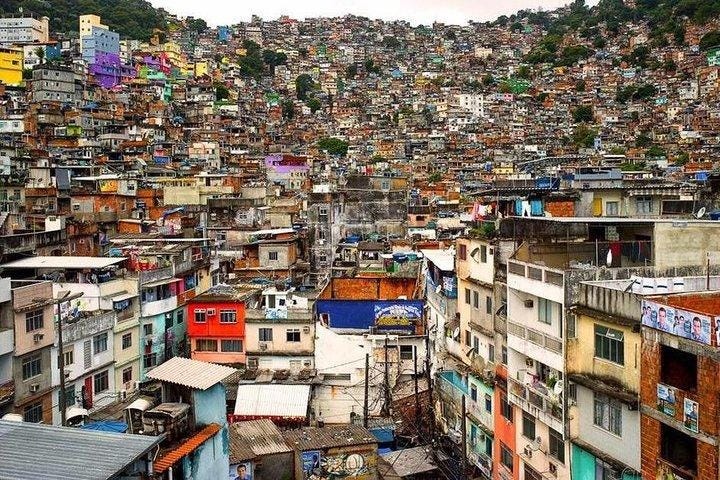
By the mid-20th century, favelas had become permanent features of Brazil’s urban landscape. They housed workers who sustained the city’s economy while remaining excluded from political representation, adequate housing, sanitation, and education. These conditions have persisted into the present, despite cycles of state intervention that alternated between neglect, criminalization, and forced removal (Perlman 2010; Valladares 2005). Favelas were simultaneously hyper-visible as “problems” and invisible as lived communities rich in cultural production.
While samba, born in Afro-Brazilian and working-class communities, had long articulated favela life, bossa nova largely avoided such direct engagement. Jobim’s “Favela” thus stands out as a quiet acknowledgment of what the genre typically left unsaid. The composition does not attempt to narrate hardship explicitly, nor does it romanticize poverty for artistic effect. Instead, it communicates constraint through musical language: harmonies that linger unresolved, phrases that resist full release, and rhythmic patterns that suggest imbalance rather than ease.
This restraint mirrors the structural limitations placed upon favela communities themselves, spaces that have produced extraordinary creativity, resilience, and musical innovation while remaining constrained by systemic neglect and social stigma (McCann 2004). In this way, “Favela” functions less as depiction than as implication. It asks listeners to recognize absence, to feel tension without spectacle, and to confront what remains unspoken within Brazil’s celebrated modern identity.
By opening the season in November with “Favela,” Jim Ferraioulo and Hispañola Jam framed the anniversary not with triumphalism, but with acknowledgment. Performed in the intimate yet communal setting of Tío Pepe Restaurant, the piece invited listeners into a shared reckoning: an understanding that beauty and inequality have long coexisted in Brazil’s musical and social history. The silence confronted here is not merely historical; it continues to shape whose lives are heard, valued, and remembered.
“Libertango”: Freedom, Modernity, and the Sound of a Nation in Crisis
Performed by Timofei Rosales Tango Trio
Music by Astor Piazzolla
Pitch Night with Communitas America at City College of New York, December 10
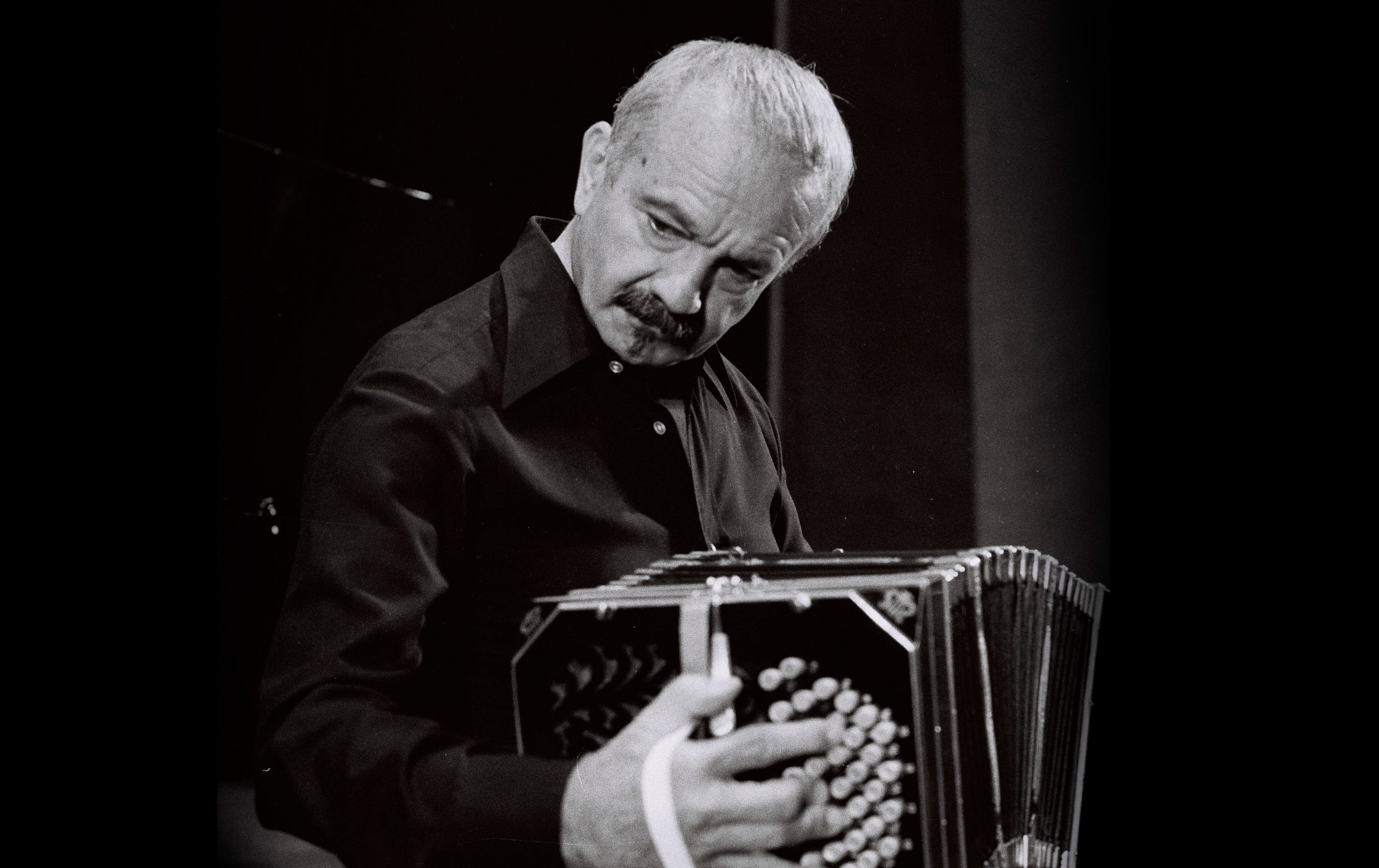
When Astor Piazzolla composed “Libertango” in 1974, Argentina stood on the precipice of one of the most violent and repressive periods in its modern history. Political polarization, economic instability, and escalating state violence had already destabilized the country. Within two years, a military junta would seize power, inaugurating a dictatorship (1976–1983) defined by censorship, forced disappearances, torture, and the systematic silencing of dissent, an era now remembered as the Proceso de Reorganización Nacional (Romero 2002).
Piazzolla’s rebellion was musical in form but political in consequence. By radically reimagining tango, Argentina’s most emblematic cultural symbol, he challenged deeply entrenched notions of national identity. Traditional tango, rooted in the working-class neighborhoods of Buenos Aires and shaped by nostalgia for a disappearing past, had become sanctified as a fixed tradition. Piazzolla rejected this stasis. Drawing on jazz improvisation, extended classical forms, dissonant harmonies, and complex rhythms, he created what came to be known as nuevo tango, music that reflected the anxieties, contradictions, and modernity of contemporary Argentina (Savigliano 1995).
This transformation provoked fierce backlash. Purists accused Piazzolla of betraying tango’s essence, of contaminating a national treasure with “foreign” influences. Radio stations refused to play his music; critics dismissed it as elitist or un-Argentine. Piazzolla responded unapologetically, asserting that cultural traditions must evolve or become irrelevant. “Tradition,” he argued, “is not the worship of ashes, but the preservation of fire” (Azzi and Collier 2000).
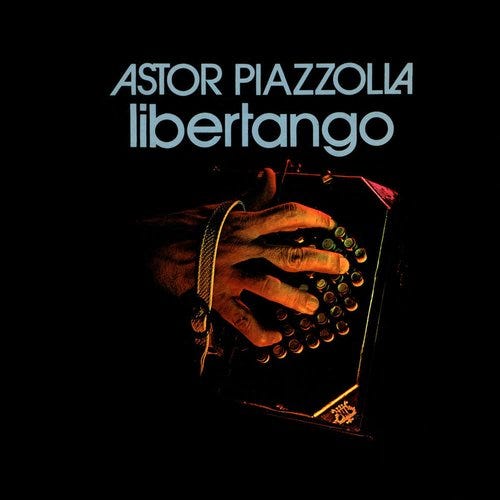
The title “Libertango” crystallizes this philosophy. A fusion of libertad (freedom) and tango, the word itself declares emancipation from aesthetic constraint, from cultural orthodoxy, and, implicitly, from authoritarian control. Musically, the piece embodies this declaration. Its relentless rhythmic drive, repetitive bass figures, and sharply articulated motifs reject tango’s languid melancholy in favor of propulsion and insistence. There is no nostalgia here, no sentimental retreat into the past. Instead, the music presses forward, mirroring a society in which stability had fractured, and freedom was increasingly precarious.
Beyond “Libertango,” Piazzolla’s broader body of work consistently engaged Argentina’s historical tensions: tradition versus modernity, nationalism versus cosmopolitanism, memory versus rupture. His compositions became, for many listeners, a soundtrack to exile, displacement, and unresolved grief—emotional states that would come to define the dictatorship’s legacy for an entire generation (Romero 2002; Savigliano 1995).

Performed by Timofei Rosales and his trio during Pitch Night with Communitas America, “Libertango” in December, the piece resonated far beyond its original historical moment. In a space devoted to civic engagement, dialogue, and social innovation, the piece functioned as a meditation on collective action and cultural resistance. It underscored how artistic freedom and political freedom are inseparable, and how both require the courage to confront silence imposed by authority.
Stay tuned for Pt. 2 where we’ll continue with reflections on…

Gaitán’s Legacy: Colombia, Interrupted Futures, and the Sound of Unresolved History
Performed by Alex Pastrana at Terraza 7, January 15